
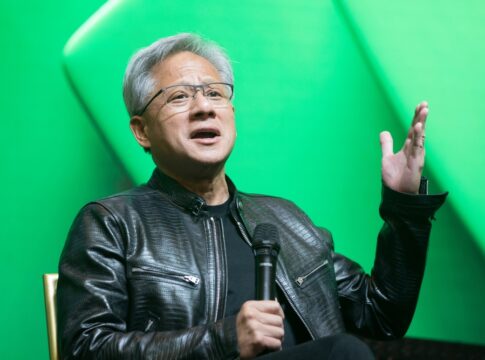
Nvidia’s CEO refused to face Senate questions on China chip sales and national security, putting America’s AI edge and our security in the spotlight.
Story Snapshot
- Senator Elizabeth Warren said Nvidia’s China chip sales pose national security risks.
- Nvidia CEO Jensen Huang declined to testify at a Senate hearing on export controls.
- Congressional scrutiny of export controls and possible loopholes is growing.
- Claims of chip diversion lack public proof, leaving key questions unresolved.
Warren Targets Nvidia Over China And Security Risks
Senator Elizabeth Warren said selling advanced chips to China can boost the Chinese military and threaten United States security. She argued the public deserves answers from Nvidia’s chief, Jensen Huang, on how the company handles export rules and any China-linked sales. Warren’s push comes as lawmakers review how artificial intelligence hardware could change warfare and spying. Her focus is clear: stop sensitive computing power from aiding an adversary that seeks to overtake the United States in AI.
Warren’s statement followed reports that senior United States military leaders worry that top-tier chips can supercharge China’s defense systems. Those fears include faster targeting, better cyber tools, and more accurate intelligence. Warren tied those concerns to Congress’s duty to tighten the law if needed. She framed the issue as a simple choice: protect national security now, or risk letting cutting-edge tools slip into the wrong hands.
Nvidia CEO Declines Senate Testimony Amid Intensified Scrutiny
Nvidia CEO Jensen Huang declined Warren’s request to testify at a Senate Banking Committee hearing on artificial intelligence and the American economy. News outlets said the company cited scheduling conflicts for the refusal. The no-show drew criticism because the hearing examined export controls and Nvidia’s China ties. The refusal also made room for fresh calls to require clear answers under oath about how chip makers screen buyers and prevent gray-market resales to restricted entities.
Congressional interest in Nvidia’s China exposure has grown as export control rules expand and adjust. Lawmakers want to know whether current safeguards actually block sensitive chips or if gaps let them move through third countries to China. Reports highlighted alleged loopholes and “diversions,” but they did not present public customs records or formal audit findings that confirm a specific flow of banned chips to China. That gap in proof keeps the policy debate sharp but unsettled.
What We Know Versus What Is Still Unproven
Three facts are solid: Warren pressed the security case, Huang declined to testify, and Congress is probing export control compliance. What remains unproven in public is whether a named batch of restricted chips was diverted to China, and who enabled it. CNBC’s coverage summarized the claims but did not link to a government audit, a court filing, or customs data that verify such diversion. That means lawmakers must either surface hard evidence or refine rules based on risk alone.
At the same time, Nvidia promotes an “open innovation” story and has won industry awards for building an ecosystem around its hardware and software. Those honors show market leadership, not compliance answers. Awards do not settle whether current screening, end-user checks, and re-export controls are strong enough. They also do not tell us how many sales Nvidia blocks when buyers raise red flags. Security policy must rest on verified facts and enforceable rules, not branding claims.
What A Tough, America-First Path Looks Like Now
Congress should demand records from the Department of Commerce’s Bureau of Industry and Security, and from United States Customs and Border Protection, on suspected diversions since 2024. Lawmakers should require named testimony from defense leaders on how specific chip classes change battlefield risk. If companies want access to the United States market and taxpayer research partnerships, they should accept tighter end-use checks and strong penalties for violations that aid adversaries.
Just in: Senator Warren demands clarification from Nvidia, Space X and Google on Pentagon AI contracts.
The office of U.S. Democratic Senator Elizabeth Warren said in an emailed statement that Warren has sent letters to Google, SpaceX, Nvidia, Reflection AI, and the U.S.…
— Alpha Wire (@AlphaWireNewsAi) July 7, 2026
The Trump administration can backstop this push with faster blacklist updates, clearer guidance to close routing tricks, and joint enforcement with allies. The goal is simple: keep the most advanced compute out of China’s military and double down on American capacity at home. That means more foundry investment, more power generation, and faster buildouts of packaging and memory. Out-innovate China here, and shut the back doors abroad. Security first, and growth on our terms.
Sources:
pjmedia.com, nbcnews.com, dailymotion.com, x.com