
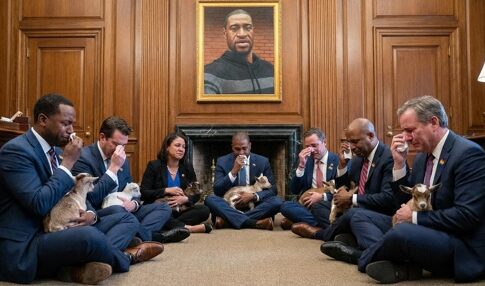
A mayor using Memorial Day to spotlight George Floyd instead of fallen soldiers tells you everything about how America’s political class now treats sacrifice, memory, and power.
Story Snapshot
- Minneapolis Mayor Jacob Frey publicly framed George Floyd as a transformative figure for his city.
- Video and city documents show a long-running, emotional, and official effort to memorialize Floyd.
- Critics argue this Memorial Day focus sidelines the men and women who died in uniform.
- The clash exposes a deeper fight over what, and who, America chooses to honor.
How Jacob Frey Turned One Death Into A Civic Centerpiece
Minneapolis Mayor Jacob Frey did not treat George Floyd as just one tragic death in a large city; he elevated Floyd into a defining symbol of Minneapolis itself. At Floyd’s memorial in 2020, television footage captured Frey approaching the casket, dropping to one knee, and sobbing in front of the cameras, a moment that instantly became part of the city’s political memory.[1][2][3] That display was not a one-off. It set the tone for how his administration would talk about Floyd for years afterward.[2]
City communications under Frey’s name later described “George Floyd Square” as a project that would both “honor George Floyd” and serve as a space for healing and unity in Minneapolis.[2] This is not language tossed off in a tweet; it is the formal, written voice of the mayor’s office, treating a single incident of police use of force as the moral axis around which future city planning should turn. That deliberate framing laid the groundwork for the Memorial Day controversy now erupting around him.[2]
Memorial Day, George Floyd, And A Political Choice
Memorial Day exists to remember Americans who died in uniform defending the country, not every person whose death affected public debate. When a Democrat mayor chooses that one day to publicly spotlight George Floyd again, critics argue he effectively demotes military sacrifice to the background while elevating a criminal suspect killed in police custody to symbolic sainthood. From a common-sense conservative standpoint, that choice signals priorities warped by ideology rather than gratitude for service.
Defenders claim Frey is simply acknowledging a pivotal moment that “changed Minneapolis,” pointing to his emotional appearance at Floyd’s memorial and to years of policy and planning anchored in Floyd’s name.[1][2] But that defense proves the critics’ core point: the mayor has consciously made Floyd a moral touchstone for the city. Once Memorial Day rolls around, choosing to highlight that touchstone instead of fallen service members looks less like oversight and more like a continuation of a political project that treats policing narratives as more important than military graves.
Why The Imagery Of Grief Matters More Than The Policy Details
Frey’s emotional kneeling at Floyd’s casket in 2020 matters because it illustrates the emotional hierarchy he put before the public.[1][2][3] The mayor did not project stoic resolve or balanced grief; he projected unrestrained sorrow for one man whose death, though tragic, did not come on a battlefield or in defense of the nation. In a media age where images define truth for many voters, that scene became a shorthand: this is a leader who ties his moral compass to George Floyd, not to a cemetery full of flag-draped headstones.
From a conservative perspective rooted in ordered liberty and respect for those who wear the uniform, that hierarchy feels upside down. A city can acknowledge police abuse, prosecute wrongdoing, and reform departments without turning every high-profile death into a civic shrine. When the same mayor’s social feeds go quiet or perfunctory on Memorial Day while his Floyd messaging remains fulsome, critics see not empathy but a political brand built on selective outrage. That perception is strengthened when official city planning documents literally enshrine Floyd’s name in streets and public spaces.[2]
What This Reveals About Today’s Battle Over American Memory
The fight over Frey’s Memorial Day messaging is less about one politician’s bad judgment and more about what America now chooses to remember. The left increasingly treats figures like George Floyd as martyrs in a quasi-religious narrative about systemic oppression, worthy of murals, renamed squares, and endless anniversary coverage. At the same time, traditional patriotic rituals and days of remembrance often receive formulaic statements, if they get meaningful attention at all.
Minneapolis Mayor Jacob Frey honors George Floyd on Memorial Day https://t.co/HBkXCysqFB
— Libby Emmons (@libbyemmons) May 25, 2026
Common-sense citizens instinctively understand that a civilization survives only if it remembers who bled for it. When a mayor pours his emotion and political capital into one controversial death while giving the bare minimum to those who died wearing the flag, residents see the cultural inversion clearly. They may not quote policy documents, but they remember the kneeling, the sobbing, the square named after George Floyd, and the quiet on the day reserved for those who never came home.[1][2]
Sources:
[1] YouTube – Minneapolis Mayor Jacob Frey cries at George Floyd’s …
[2] Web – Mayor Frey Celebrates Major Step Forward for George Floyd Square
[3] Web – Minneapolis Mayor Speech After George Floyd Death | Rev