
An alleged 75-page manifesto tied to the San Diego mosque shooting is raising fresh questions about what really motivated the teenage attackers—and how officials are shaping the story before the evidence is fully public.
Story Snapshot
- Police and federal agents quickly framed the attack as a hate crime driven by online radicalization.
- Officials say they seized more than 30 weapons and hate-filled writings, but have not released the underlying evidence.
- Reports of a lengthy manifesto and anti-Trump views complicate early left-versus-right assumptions about motive.
- Conservatives should watch how “hate crime” labels and internet-censorship talk are used to justify new government powers.
What Authorities Say Happened At The Islamic Center
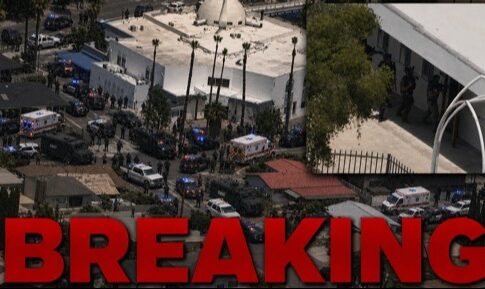
San Diego police say two male teenagers, ages 17 and 18, opened fire outside the Islamic Center of San Diego just before midday, killing security guard Amin Abdullah and staff members Mohamed Nader and Mansour Kaziha before fleeing and later dying from apparent self-inflicted gunshot wounds in a nearby vehicle.[1] Officials report that Abdullah engaged the gunmen in a shootout, initiated a lockdown, and bought precious time for roughly 140 children to be evacuated from classrooms inside the mosque complex.[2] Authorities are investigating the incident as a hate-motivated attack.[1]
Law enforcement leaders describe a rapid, multi-layered response. Police say that about two hours before the shooting, the mother of the 17-year-old called to report her son missing with firearms and a vehicle, alongside a companion dressed in camouflage. Officers used license-plate readers to track the car, notified a local high school, and began searching before the mosque call came in. After the attack, investigators executed at least three search warrants, seizing more than 30 guns, a crossbow, ammunition, tactical gear, and electronic devices from locations tied to the suspects.[1]
So according to the manifesto, we are now supposed to believe that the trans couple that shot up the San Diego Islamic Center yesterday was….
NOT trans but incels
HATED women
HATED Islam (but not Muslims)
HATED black people
HATED ALL immigrants (legal/illegal)
HATED gay and… https://t.co/KeADoGl3Qb— Gonz (@FaceLikeTheSun) May 20, 2026
The Alleged Manifesto And Online Radicalization Narrative
Officials and media reports say investigators discovered writings in the suspects’ vehicle that expressed hateful religious and racial views and outlined how the shooters believed the world should look.[2] Federal investigators from the Federal Bureau of Investigation (FBI) have publicly said the teens appear to have been radicalized online, and briefings emphasize their exposure to violent ideologies on the internet.[1] Separate reporting describes a 75-page manifesto circulating online that allegedly praises mass killers, uses neo-Nazi symbols, attacks Muslims and Jewish people, and includes misogyny, racism, incel rhetoric, and hostility toward both the political left and right, including anti-Trump commentary.[1]
Here is where the story gets more complicated than some early headlines suggest. The public has not seen the actual writings or the full manifesto; instead, we are getting paraphrases and characterizations filtered through press conferences and media summaries.[1] Authorities have not yet released the digital forensic reports, account histories, or chain-of-custody documents that would show exactly what the suspects wrote, when they wrote it, or how closely it lines up with the “online radicalization” label now dominating coverage.[1] That gap between rhetoric and hard evidence leaves room for spin, especially when political actors see an opportunity to leverage tragedy into new speech controls.
Early Framing, Hate-Crime Labels, And The Risk To Free Speech
Press briefings from San Diego Police Department leaders, the FBI, the mayor, and mosque representatives quickly set a narrative: heroic security guard, threatened children, hateful extremists, and a community under attack.[1] That story honors real courage and grief, but it also creates an emotionally charged environment where skeptical questions about evidence and motive can be painted as insensitive or “denial.” Once officials label an incident a hate crime and blame online radicalization, news outlets tend to repeat those phrases as settled fact, even before underlying forensic proof is publicly available.[1]
For conservatives who have watched “hate speech” become a catch-all justification for censorship, that should ring alarm bells. The same institutions that recently pushed social-media platforms to throttle stories about border failures, gender ideology in schools, and questions about election integrity now see another data point they can use to argue for tighter policing of online speech. Yet the record in this case, as supplied so far, does not include the primary documents—manifesto text, autopsy reports, dispatch logs, ballistic analyses, or detailed digital forensics—that would let independent observers verify the official story or debunk any rushed assumptions.[1] Demanding those documents is not “taking sides”; it is insisting that government power stay tethered to demonstrable facts.
Why Conservatives Should Demand Full Evidence, Not Just Sound Bites
Both “Side A” and “Side B” in the public debate acknowledge that heroic actions by the security guard likely saved many children, and that three innocent people were murdered.[1] The dispute is about how quickly we close the book on motive and how comfortable we are letting officials drive the narrative without releasing the underlying proof. Side B—those calling for caution—points out that early coverage contained conflicting dates and rushed assumptions, while witness observations about gunfire and vehicle movements remain only partially confirmed.[1][2] They also note that key claims about hate ideology and online radicalization rest on investigator summaries rather than publicly shared exhibits.[1]
For readers who care about the Constitution, due process, and limited government, this is exactly when to pay attention. When tragedy strikes, politicians and bureaucrats often reach for “solutions” that expand surveillance, pressure tech platforms, or blur the line between unpopular speech and criminal conduct. Before any new powers are granted—or any community is blamed collectively—citizens should insist on seeing the full incident reports, 911 audio, dispatch logs, search-warrant returns, manifesto text, and digital forensics that officials say they already have.[1] Honoring the victims means punishing actual killers and co-conspirators, not using their evil as a pretext to chip away at free speech and honest debate. Conservatives can support tough, targeted law enforcement while rejecting any effort to turn this horrific crime into another excuse for broad censorship or permanent emergency powers.
Sources:
[1] YouTube – WATCH: San Diego officials hold press briefing on deadly …
[2] Web – WATCH LIVE: San Diego police update on deadly mosque …