
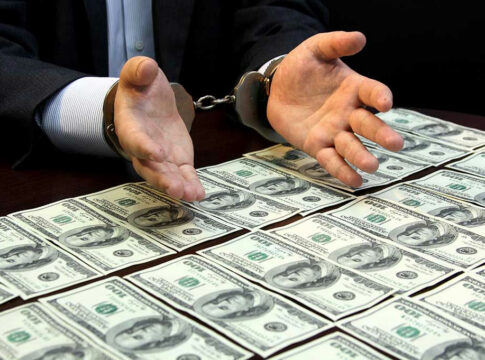
Prosecutors say sham hospices and stolen identities siphoned up to $267 million from California’s safety net, raising fresh doubts about whether government gatekeepers can police the programs they fund.
Story Snapshot
- California’s attorney general alleges a $267 million Medi-Cal hospice fraud involving stolen identities and fake services [5].
- Federal prosecutors separately charged suspects in a related health care takedown using sham hospices and false claims [3].
- Authorities reported arrests, searches, cash seizures, and multiple criminal complaints tied to the schemes [5].
- The public record remains allegation-driven; detailed charging documents for all defendants are not yet available [3][5].
What Investigators Say Happened
California Attorney General Rob Bonta announced that investigators uncovered a hospice fraud ring that defrauded Medi-Cal of approximately $267 million, asserting that no hospice services were actually rendered to the enrolled beneficiaries [5]. The state alleges participants purchased personal identifying information for non-California residents from the dark web, enrolled those identities in Medi-Cal, and used straw owners to acquire hospice companies that billed for nonexistent care [5]. The scheme’s structure aligns with known hospice-fraud patterns involving fabricated records and ineligible patients [3][6].
Federal prosecutors in the Central District of California separately described a coordinated health care fraud takedown in which owners of sham hospice facilities allegedly billed taxpayers for patients who were not terminally ill [3]. The federal account cites false and fraudulent claims, medically unnecessary services, and fabricated client notes as the methods used to obtain reimbursements [3]. While the federal cases emphasize Medicare, the state case focuses on Medi-Cal; taken together, the enforcement actions outline a multi-pronged crackdown on hospice billing abuse across programs [3][5].
🚨LARGEST MEDI-CAL FRAUD CASE IN CALIFORNIA HISTORY?
A 66yo Orange County man pleaded guilty to wire fraud after stealing nearly $180 million from California’s Medi-Cal program.
Paul Randall and his accomplices, including a pharmacist and nurse practitioner, submitted more than… pic.twitter.com/YJA964mp4n
— NewsForce (@Newsforce) June 2, 2026
Arrests, Searches, and Seizures Reported
The California Department of Justice said “Operation Skip Trace” resulted in five arrests after searches at ten locations, with 21 suspects charged in three criminal complaints, and the seizure of $757,000 in cash and two handguns [5]. Federal authorities reported eight arrests tied to the health care fraud takedown involving sham hospices and other schemes totaling more than $50 million in alleged losses [3]. Broadcast coverage echoed officials’ claims about fake records, stolen identities, and non-existent offices used to justify billing [4].
State and local reporting also relayed prosecutors’ description of straw owners acquiring hospice companies, followed by rapid billing against public programs, and funds moved through shell entities and digital channels to conceal proceeds [5][4]. These characteristics track prior hospice enforcement actions, where convictions have resulted from evidence of kickbacks, falsified documentation, and improper patient recruitment [6]. While those earlier cases are distinct, they illustrate how prosecutors often frame hospice fraud as a repeatable model that exploits weak oversight and fragmented program controls [6].
Why This Matters to Taxpayers
Taxpayers on both the right and the left see a pattern: massive alleged fraud surfaces only after years of billing, suggesting oversight gaps that allow sophisticated operators to harvest public funds before enforcement catches up. California’s figure of $267 million, alongside federal charges exceeding $50 million in alleged losses, underscores how large, complex networks can exploit identity theft, shell companies, and opaque ownership to defeat screening systems designed to protect limited health care dollars [5][3].
Mixed program references—Medi-Cal in the state case and Medicare in the federal takedown—can blur lines and fuel broader distrust in government competence. The current public record is dominated by prosecutorial accounts, and key documents, such as complete charging papers, are not yet broadly available, which limits independent verification of defendant-specific roles [3][5]. Even so, the scale of the alleged schemes, the arrests, and the cash seizures indicate a significant enforcement response to hospice-related fraud that policymakers have flagged for years [5][3][6].
Sources:
[3] YouTube – Alleged hospice fraud ring stole $267 million from taxpayers, AG says
[4] Web – 8 Arrested in Health Care Fraud Takedown, Including Owners of …
[5] Web – Doctors, nurses arrested in Southern California health care fraud …
[6] Web – Attorney General Bonta Dismantles Los Angeles Hospice Fraud …