
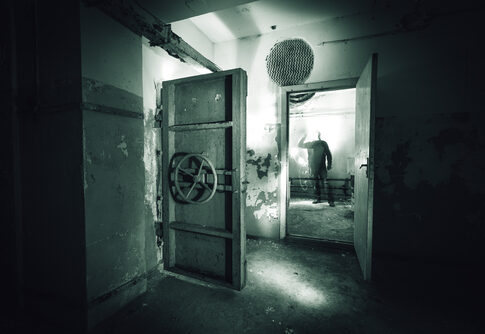
A sprawling Cold War ammo depot in South Dakota has become America’s largest doomsday bunker community—and a flashpoint over contracts, promises, and what real preparedness should look like.
Story Snapshot
- A former U.S. Army munitions depot near Edgemont, South Dakota, now holds roughly 575 private concrete-and-steel bunkers marketed as a survival community for over 5,000 people.[2][3][7]
- The developer, Vivos, sells 99‑year bunker leases or fee ownership with claims of off‑grid resilience, blast protection, and long‑term autonomous living.[2][3][6]
- Residents and reporters have raised serious concerns over high costs, missing amenities, and lease terms, triggering class‑action litigation and broader questions about consumer protection in the bunker industry.[4][7]
- For conservatives focused on self‑reliance, the project highlights both the appeal of taking preparedness into your own hands and the need to guard against overhyped “doomsday” marketing.
From Army Munitions Depot to “World’s Largest” Survival Community
Across roughly 18 square miles of grassland near the Black Hills, rows of hardened bunkers once built by the U.S. Army to store bombs and munitions have been repurposed into what Vivos calls the world’s largest civilian survival community.[1][2][3] The former Black Hills Army base dates back to 1942 and was decommissioned in 1967, leaving behind 575 concrete and steel igloo‑style bunkers designed to withstand internal explosions and separated by hundreds of feet for safety.[3][4][5] For a preparedness‑minded, conservative audience wary of coastal chaos and dense urban targets, the site’s inland location, low crime, and distance from likely nuclear targets are part of the sales pitch.[1][2][4] Vivos markets the project—now branded Vivos xPoint—as a refuge for more than 5,000 people in the event of war, grid collapse, or other catastrophes.[2][3][7]
Each bunker is roughly 2,100 to 2,200 square feet, with an arched concrete shell, steel blast door, and earth berm for added protection.[1][2][3][5] Vivos materials say the structures can house 10 to 24 people with supplies for “a year or more” of off‑grid living, supported by wells, ventilation shafts, and room for generators, filtration gear, and storage.[2][3] Marketing copy emphasizes that the bunkers are not flimsy backyard shelters but military‑grade hardened structures retooled for families, church groups, or like‑minded communities who want a safe fallback while the world above faces chaos.[1][2][3] For those who have watched Washington print trillions, politicize energy, and ignore border security, the appeal of a self‑reliant backup plan is obvious.
Costs, Contracts, and the Reality Behind the Brochure
Under the business model, a typical 99‑year bunker lease at xPoint costs around $55,000 upfront, plus about $1,091 per year in ground rent, with buyers responsible for building out interiors that can easily run six figures.[3][4][6] Some reporting describes lease prices between $25,000 and $55,000 depending on size, with additional monthly common‑area or amenity fees layered on top.[4] Vivos also offers fee‑simple ownership of a bunker and surrounding parcel for around $75,000, marketed as a way to “own your refuge forever.”[3][6] Promotional language calls these prices “affordable” and claims “virtually anyone can afford” a bunker, but for most middle‑class families already squeezed by inflated food, fuel, and housing costs, that entry ticket plus build‑out will look more like a second house than a simple insurance policy.[3][4][6][7] That disconnect between “everyman” marketing and elite‑level capital outlay feeds skepticism that some in the prepper space are monetizing fear rather than championing practical resilience.
Beyond the dollars, the legal and governance structure has drawn the harshest scrutiny. Residents and journalists in South Dakota describe concerns about safety, amenity delivery, and what they see as one‑sided lease terms that heavily favor the company.[4][7] A class‑action lawsuit filed by bunker tenants alleges that many of the amenities touted in marketing—such as a fully functioning community hub with stores, medical facilities, and recreation—were never built or delivered as promised.[4] Plaintiffs also argue that the lease itself is illegal and unenforceable under state law, and a circuit court judge reportedly agreed that the lease crossed legal lines, though that ruling has been appealed to the South Dakota Supreme Court and is not yet final.[4] For conservatives who value contract sanctity, property rights, and honest dealing, the fact that a “self‑reliance” project is mired in claims of deceptive terms and unmet promises raises red flags about whether some private actors are treating patriot anxiety as a revenue stream.
Amenity Gaps, Community Tensions, and Lessons for Prepared Patriots
Vivos and supportive write‑ups describe an eventual community with twenty‑four‑hour security, a general store, members‑only restaurant and bar, theater, gym, and medical center, all framed as shared infrastructure that makes long‑term habitation realistic.[1][2][3] However, critical reporting and the lawsuit contend that “most” of these amenities have not materialized at scale, leaving many bunkers as bare concrete shells on windswept prairie with limited common services.[4][7] Some residents reportedly moved in expecting a functioning, tightly knit refuge for pandemics or civil unrest but later left when they saw that both the threats and the infrastructure did not match the hype.[7] Accounts also describe internal disputes over community self‑governance, with the owner reportedly resisting resident efforts to establish stronger local control.[7] That tension cuts against the conservative ideal of neighborhoods and voluntary associations taking responsibility for their own affairs instead of deferring to distant management.
Vivos xPoint in South Dakota is a 575-bunker former Army depot turned private survival community billed as the world’s largest doomsday shelter network.
— Rohit Agrawal (@rohitsmb) May 30, 2026
For those who believe in preparedness, the xPoint story is not a warning against bunkers themselves but against outsourcing your security and autonomy to glossy marketing and complex lease structures. The underlying concept—repurposing hardened government infrastructure so ordinary families, not just billionaires, have a place to ride out the worst—is compelling.[2][3][5][7] Yet the combination of high buy‑in, disputed contracts, and partial build‑out shows why due diligence matters as much in the preparedness world as in any real‑estate deal. Patriots considering such options should treat claims about blast ratings, amenities, and “community” like any other major investment: demand independent inspections, read every page of the contract, talk to current and former residents, and verify what has actually been built, staffed, and maintained. In an era of geopolitical instability and fiscal chaos, self‑reliance remains essential—but so does guarding your wallet and your property rights from those who would profit from your legitimate concerns.
Sources:
[1] Web – Meet America’s Largest Doomsday Bunker Community
[2] Web – Vivos xPoint Survival Bunker – Uncrate
[3] Web – Learn More – Vivos shelters
[4] YouTube – The Largest Doomsday Bunker Community In The World Vivos xPoint
[5] Web – Vivos xPoint The Worlds Largest Survival Bunker Complex
[6] Web – Igloo bunker residents file class-action lawsuit against owner
[7] Web – Vivos (underground shelter) – Wikipedia