
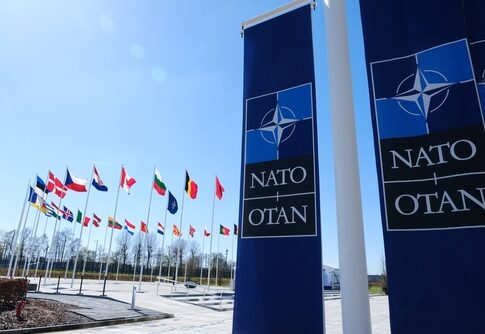
As Trump blasts NATO as a “paper tiger” over the Iran war, Washington insiders quietly admit his hands are partly tied by a law that tried to stop him from ever walking away.
Story Snapshot
- Trump says NATO failed a “test” by refusing to back the U.S.‑Israel war against Iran and is now “beyond reconsideration.”
- European leaders refused to send warships to the Strait of Hormuz, drawing sharp Trump criticism of countries like Germany, France, Italy, Spain, and the United Kingdom.
- Congress passed a 2024 defense law to block any president from quitting NATO without a two‑thirds Senate vote or a new law.
- Trump still threatens to pull out and argues NATO allies are “delinquent” on payments, saying he forced them to pay tens of billions more.
Trump’s NATO Fury: Allies Refuse His Iran War “Test”
President Donald Trump is openly raging at NATO after key European allies refused to send warships to help the United States and Israel in the war against Iran and to secure the Strait of Hormuz. Trump told The Telegraph and others that NATO had failed a major “test,” arguing that if the alliance cannot stand with America in a real fight, then it is not worth the cost. He singled out Germany, France, Italy, Spain, and the United Kingdom for refusing his requests for direct military support, casting their decisions as proof that the alliance is letting American taxpayers carry the load while Europe sits on the sidelines.
Trump sharpened his language by calling NATO a “paper tiger,” saying he was “never swayed” by the alliance and now views U.S. membership as “beyond reconsideration.” In his view, NATO talks tough but fails when the shooting starts, especially when the fight is outside narrow European borders. His message to conservative voters is simple and direct: the American people fund European defense, yet when America calls for help, those same allies hide behind legal fine print and domestic politics. That anger fits a long pattern, going back years, of Trump blasting NATO spending and questioning why U.S. troops and dollars are locked into defending countries that will not back America when it counts.
The Law That Tried to Chain the President to NATO
While Trump’s rhetoric is fiery, a major legal roadblock stands in his way: Congress quietly pushed through a restriction that tries to stop any president from leaving NATO alone. Section 1250A of the 2024 National Defense Authorization Act bars the use of federal funds to support withdrawal and says the United States cannot quit the treaty without a two‑thirds Senate vote or new legislation. Legal analysts note this is the first time in American history that Congress has directly tried to prevent a president from exiting a specific treaty, a move driven by fear of Trump’s earlier threats and a bipartisan push from Senators Marco Rubio and Tim Kaine. Supporters claim this protects national security and keeps NATO stable, but critics see it as another case of Congress tying the elected Commander‑in‑Chief’s hands on key foreign policy choices.
So far, there is no sign the Trump White House has started the formal legal process to leave NATO, such as filing an official notice of denunciation under Article 13 of the treaty. That gap is exactly what establishment voices use to call his threats “bluff” or pure pressure politics. NATO diplomats and congressional aides tell reporters there have been no serious withdrawal talks in Brussels or on Capitol Hill, even as Trump keeps raising the issue in interviews and summits. For many in the permanent foreign policy class, the 2024 law is their shield: they believe it can block Trump from acting, no matter what voters want or what he promised about forcing allies to pull their weight.
Money, “Delinquent” Allies, and the Bigger Fight Over Sovereignty
Trump’s NATO anger is not just about Iran; it is also about money and fairness. He has long argued that many European members were “delinquent” in meeting defense spending promises and that the United States was stuck protecting countries that were not paying their share. In 2018 remarks cited by the Atlantic Council, Trump claimed his pressure forced allies to add around $100 billion in defense spending they had avoided for years. That message still resonates with many conservatives who are tired of seeing American jobs, tax dollars, and troops committed overseas while Washington struggles with debt, border security, and domestic priorities at home.
Trump on further US troop cuts in Europe: "We will see. I am very disappointed by NATO." No decision made yet, despite privately floating a one-third reduction this spring after allies refused to join his Iran operation. Didn't threaten full NATO withdrawal at the summit though.
— MacroSphere (@MacroSphereX) July 9, 2026
Experts note that Trump’s threats to leave NATO have a track record of forcing Europe to spend more on defense and take U.S. complaints seriously. At the same time, mainstream media and many in the foreign policy world frame his withdrawal talk as “reckless” and “illegal,” warning that even raising the idea harms alliance unity. To many conservative voters, that pushback looks like another case where unelected experts and global institutions try to override the choices of the American people and shield a decades‑old system from any real reform. Whether Trump ultimately finds a legal path to exit or keeps using hard threats to force better deals, the core issue remains the same: who controls U.S. security policy—the voters’ elected president, or a web of treaties, lawyers, and global bureaucrats that think they know better than the citizens footing the bill?
Sources:
time.com, atlanticcouncil.org, krishnamoorthi.house.gov, en.wikipedia.org, youtube.com, facebook.com, habtoorresearch.com, everycrsreport.com, defensepriorities.org