
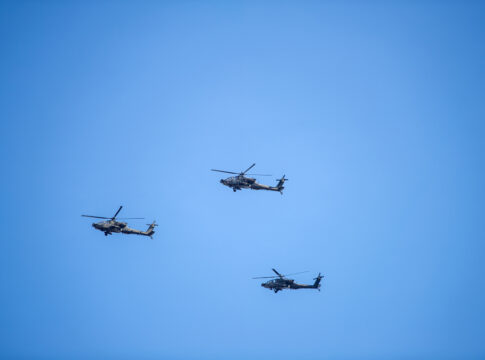
Iran shot down a U.S. Apache with a drone near Hormuz, and Washington hit back hard.
Story Highlights
- CENTCOM says Iran downed a U.S. Apache and the U.S. answered with precision strikes [2].
- President Trump called it unjustified aggression and ordered a proportional response [3].
- Both Apache pilots were rescued by a drone boat in a first-of-its-kind recovery [4].
- Tehran denies deliberate targeting, adding fog to an already tense ceasefire [14].
What Happened Over The Strait Of Hormuz
U.S. Central Command (CENTCOM) reported that an Iranian drone brought down a U.S. Army Apache helicopter near the Strait of Hormuz on June 8. Commanders described the attack as unjustified and tied to recent threats against U.S. forces and commercial shipping. Both crew members survived and were stable after rescue. The episode struck a nerve because Hormuz is a key trade lane and a flashpoint where Iran often tests the limits. The U.S. said the cause is not in doubt [2].
President Donald Trump posted that Iran shot down the advanced Apache while it patrolled the strait and said America “must, of necessity” respond. He confirmed both pilots were safe. CENTCOM later announced the United States launched self-defense strikes at 5 p.m. Eastern time at the Commander in Chief’s direction. Officials called the mission limited and proportional, aimed at restoring deterrence without sliding into a wider war. Trump said the U.S. would not ignore attacks on its people [3].
How The U.S. Responded And Why It Matters
CENTCOM said U.S. Air Force and Navy jets hit Iranian air defenses, ground control stations, and surveillance radar sites near the strait using precision munitions. The targets support the drones and sensors that threaten U.S. aircraft and ships. By striking these nodes, the U.S. seeks to cut Iran’s ability to ambush patrols or harass shipping. The command framed the action as self-defense under clear authority and stressed vigilance going forward to prevent further aggression [2].
Rescuers used an unmanned surface vessel to recover the Apache crew within about two hours, an operational first that shows how America adapts in dangerous waters. A CENTCOM spokesperson confirmed the sea drone executed the pickup, underscoring how technology can save lives when enemies try to deny access. The rapid rescue kept Iran from exploiting the incident for propaganda and signaled that U.S. forces can operate, recover, and strike even under pressure near Iran’s coast [4].
Competing Claims And The Ceasefire’s Fragile State
Iran’s state media acknowledged U.S. strikes but pushed a narrative that challenged the self-defense basis. Iranian officials and coverage on Al Jazeera said Tehran did not deliberately target the helicopter and suggested accidents can happen in tense zones. That claim conflicts with U.S. statements that an Iranian Shahed-type drone downed the Apache. The back-and-forth shows the familiar pattern: Iran dodges blame while its systems keep threatening U.S. assets and key shipping lanes during a shaky ceasefire [14].
For American readers, two points are clear. First, deterrence only works when enemies know we will act. The strike packages hit the systems that let Iran stalk our forces, and that reduces risk to our pilots and sailors now. Second, accountability matters. Washington cited specific military targets and kept the response limited to avoid a wider war, while warning more action stays on the table if Iran escalates. That balance protects American lives and global trade without giving Tehran a free pass [2].
What To Watch Next: Risk, Energy, And Resolve
Watch for Iran’s next move and for any strikes on U.S. bases or partners. Expect Tehran to test air defenses or use proxy groups to claim distance. Energy markets could swing on any hint of a shipping threat through Hormuz. The administration says the U.S. will keep sea lanes open and defend crews. That stance aligns with core American interests: secure borders, free commerce, peace through strength, and a clear message that attacks on U.S. forces carry costs, not rewards [2].
Sources:
[2] Web – U.S. forces completes strikes against Iranian targets after Apache …
[3] Web – U.S. Completes Strikes in Response to Iran’s Attack on Apache
[4] Web – ‘Unjustified Iranian aggression’: US launches strikes on Iran after …
[14] Web – US and Iran launch strikes after Trump blames Tehran for helicopter …